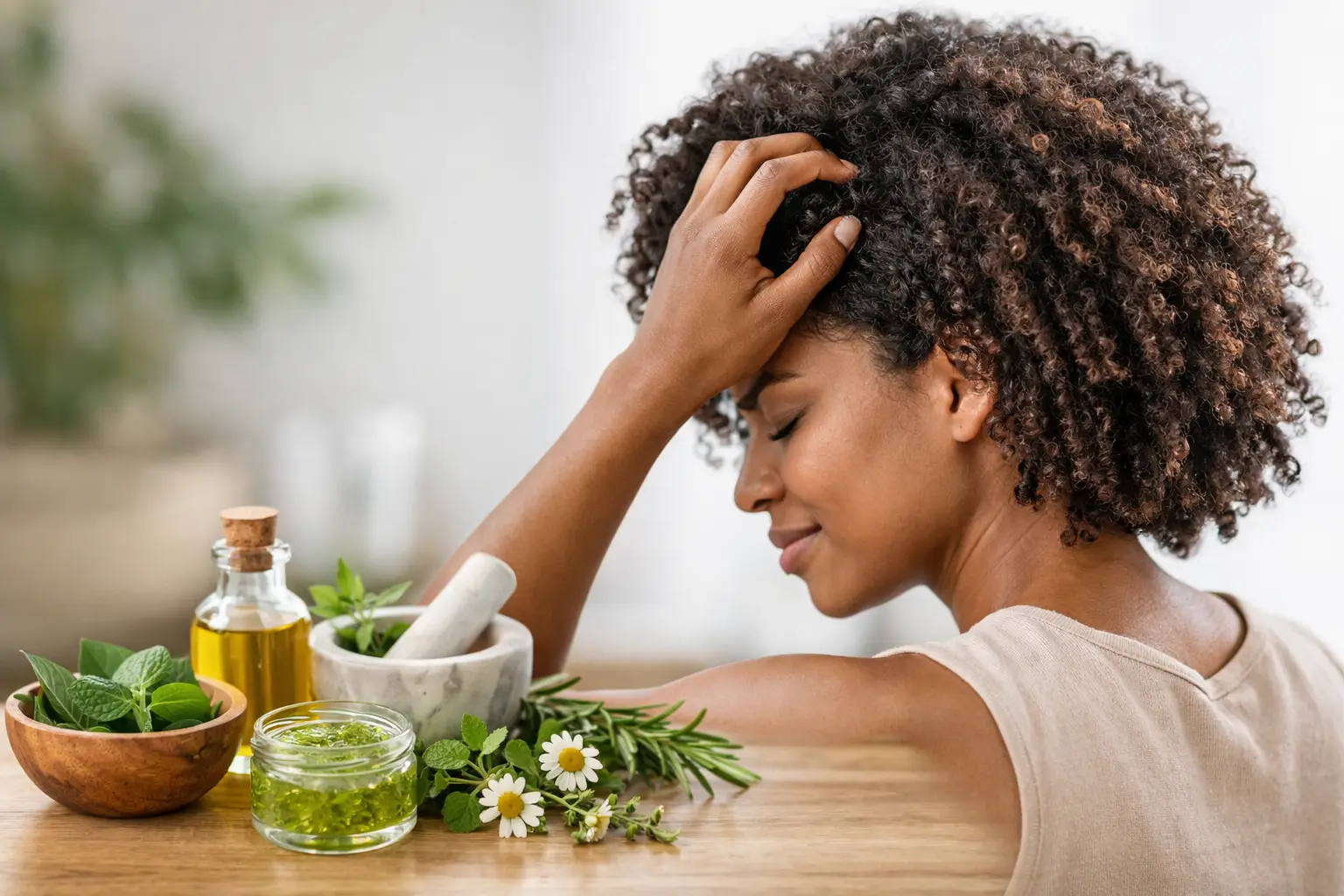
An itchy scalp rarely stays a small problem for long. What starts as occasional irritation can turn into constant scratching, visible flakes, tightness after washing, and a scalp that never seems fully comfortable. That is why many people start looking for herbal remedies for itchy scalp – not just to cover the symptom, but to calm the root cause in a gentler, more restorative way.
Herbal care can be especially helpful when the scalp is reacting to dryness, product buildup, overwashing, or harsh ingredients. The goal is not to overwhelm the scalp with stronger and stronger formulas. It is to bring it back into balance with ingredients that nourish, hydrate, and soothe while supporting a healthier scalp environment over time.
Why an itchy scalp happens in the first place
Scalp irritation has several possible causes, and the right solution depends on which one is driving the discomfort. Dry skin is one of the most common. When the scalp loses moisture, it can feel tight, flaky, and sensitive, especially in colder weather or after frequent shampooing.
Dandruff is another major trigger. Unlike simple dryness, dandruff often involves excess oil, flaking, and irritation linked to an imbalance on the scalp. Product residue can also create itching, particularly when heavy styling products, fragranced formulas, or poorly rinsed shampoos build up around the roots.
Then there is sensitivity. Some scalps react quickly to sulfates, synthetic fragrance, alcohol-heavy formulas, or overuse of exfoliating treatments. In those cases, even a product marketed as clarifying can make the problem worse.
This is where herbal scalp care tends to stand out. Instead of taking an aggressive strip-and-reset approach, it usually focuses on calming inflammation, restoring moisture, and supporting the scalp barrier.
Herbal remedies for itchy scalp that support real relief
Not every botanical ingredient works the same way. Some herbs are better for soothing, others for cleansing, and others for balancing flakes and oil. The most useful herbal remedies for itchy scalp are the ones that match your scalp’s condition instead of treating every itch the same.
Aloe vera for cooling hydration
Aloe vera is one of the most trusted plant-based ingredients for scalp discomfort because it addresses two common issues at once – irritation and dehydration. It has a naturally cooling feel, and it can help reduce the tight, dry sensation that often leads to scratching.
For a dry or mildly irritated scalp, aloe-based treatments can be a simple starting point. They are especially helpful after sun exposure, frequent washing, or seasonal dryness. Aloe is usually well tolerated, but formula matters. A lightweight, clean scalp treatment tends to perform better than a sticky gel loaded with additives.
Tea tree for flakes and buildup
Tea tree is widely used when itchiness comes with visible flakes or an oily scalp. It has clarifying properties that can help reduce the conditions that allow dandruff-related irritation to linger. That said, stronger is not always better.
Pure tea tree oil should not be applied directly to the scalp. It needs to be diluted properly in a carrier oil or used in a balanced shampoo or scalp treatment. For some people, too much tea tree can feel drying, so it works best in formulas that also include hydrating ingredients.
Neem for dandruff-prone scalps
Neem has a long history in herbal personal care, especially for scalps that struggle with persistent flaking and irritation. It is often used when the scalp feels both itchy and unclean shortly after washing. Neem can help support a clearer scalp environment without the harshness of more aggressive treatments.
Its scent is naturally strong, which some people do not love, but performance tends to matter more when the scalp is uncomfortable. In a well-balanced formula, neem can be a practical option for ongoing scalp maintenance.
Chamomile and calendula for sensitivity
When the scalp is reactive, inflamed, or irritated by fragranced or harsh products, gentler botanicals make more sense than strong exfoliants. Chamomile and calendula are often used for their soothing properties and are well suited to sensitive scalp care.
These herbs are less about deep cleansing and more about comfort. They can help reduce that raw, aggravated feeling that follows scratching or over-treatment. If your scalp gets worse every time you try a new anti-dandruff product, this is often the direction worth taking.
Rosemary for scalp support
Rosemary is often associated with healthy hair routines, but it can also play a role in scalp comfort. It helps support circulation and can be useful in formulas designed to refresh and maintain the scalp. Rosemary works best as part of a broader routine rather than as a standalone fix for severe itching.
For people dealing with mild irritation, dull hair, and occasional flakes, rosemary can be a strong supporting ingredient. It is particularly useful when paired with hydrating oils and mild cleansers.
Oils can help, but only when they match your scalp
Many people turn to oils first, and sometimes that works well. If the itch is caused by dryness, a light herbal oil blend can soften the scalp, reduce tightness, and improve comfort between washes. Jojoba, coconut oil, and infused botanical oils are common choices.
But oils are not automatically the answer. On a scalp with heavy dandruff, buildup, or yeast-related irritation, applying thick oil can make things feel worse. That is the trade-off people often miss. Nourishment is helpful, but the scalp still needs balance and breathability.
A good rule is to use lighter oiling for dry, flaky scalps and more targeted cleansing care for oily, dandruff-prone scalps. If oil leaves your roots greasy and your scalp still itchy, the issue may not be dryness at all.
How to use herbal remedies for itchy scalp effectively
The biggest mistake is trying a good ingredient in the wrong format. A soothing herb in a harsh shampoo may still leave the scalp stripped. A strong essential oil without proper dilution may trigger more irritation than relief. Results depend on both the ingredient and how it is delivered.
Start with a gentle herbal shampoo if your scalp reacts badly to standard cleansers. Look for formulas designed to hydrate while washing away residue. If itchiness is concentrated in certain areas, a scalp treatment can help deliver more targeted relief.
Consistency matters more than intensity. A scalp that has been irritated for weeks usually does not calm down after one wash. It often improves when you use a balanced routine for a couple of weeks and stop exposing it to the same triggers.
If you use herbal oils, apply a small amount to the scalp, not a heavy coating. Let it sit briefly, then wash thoroughly. If you use a treatment serum, apply it to a clean scalp so the botanicals are not fighting through layers of buildup.
What to avoid while your scalp is healing
Even the best herbal routine can struggle if the rest of your habits keep the scalp inflamed. Very hot water can worsen dryness and sensitivity. Overwashing can strip the scalp, while underwashing can allow oil and residue to accumulate. The right wash frequency depends on your scalp type, but balance is the goal.
It also helps to be cautious with styling products, heavily fragranced formulas, and any treatment that stings on contact. That tingling sensation is not always a sign that something is working. Sometimes it is just irritation.
If you wear hats often or use beard and hair products around the hairline, make sure residue is not collecting there. Scalp discomfort can start in the small areas people overlook.
When natural care is enough, and when it is not
Herbal care can make a meaningful difference for dryness, mild dandruff, irritation from harsh products, and general scalp imbalance. It is often a smart choice for people who want effective support without relying on overly aggressive formulas.
Still, there are times when itchiness needs medical attention. If the scalp is bleeding, developing thick patches, swelling, or not improving after a few weeks of gentle care, it may be more than a routine grooming issue. Psoriasis, eczema, fungal conditions, and allergic reactions can all show up as scalp itching.
Natural care is valuable, but it works best when paired with honest observation. If your scalp is asking for gentler support, herbs can be a strong place to start. If it is showing signs of something more serious, getting the right diagnosis is part of taking good care of it.
A healthier scalp usually responds to a simpler approach: cleanse without stripping, soothe without smothering, and choose ingredients that do more than make the label sound appealing. That is where herbal care proves its value – not as a quick cover-up, but as a steady path back to comfort, balance, and confidence.
Leave a Reply