An itchy scalp usually does not start as a major problem. It starts with a little tightness after washing, a few flakes on a dark shirt, or that persistent urge to scratch by midday. If you are searching for the best shampoo for itchy scalp naturally, the real goal is not just a cleaner scalp. It is lasting comfort, balanced moisture, and a formula that supports healthy hair without making irritation worse.
What actually causes an itchy scalp?
Scalp itching can come from several different issues, and that is why one shampoo does not work for everyone. For some people, the problem is simple dryness. Cold weather, frequent washing, or harsh cleansers can strip away natural oils and leave the scalp feeling tight and reactive.
For others, itching shows up alongside dandruff, product buildup, or excess oil. In those cases, the scalp is not necessarily dry in the usual sense. It may be imbalanced. When dead skin, residue, and oil collect on the scalp, they can trigger irritation, flakes, and discomfort that seem to keep coming back.
There is also the possibility of sensitivity to ingredients. Strong synthetic fragrance, heavy sulfates, and certain preservatives can leave the scalp feeling inflamed, especially if your skin already runs sensitive. That is why natural shoppers often do better with simpler, plant-based formulas that focus on comfort as much as cleansing.
What makes the best shampoo for itchy scalp naturally?
The best shampoo for itchy scalp naturally should do three things well. It should cleanse without over-drying, calm visible irritation, and help the scalp hold onto the moisture it needs to stay comfortable.
That balance matters. A shampoo that is too weak may leave behind residue and oil that keep the itch cycle going. A shampoo that is too aggressive may remove buildup, but also strip the scalp and trigger even more dryness. Natural care works best when it respects the scalp barrier instead of fighting against it.
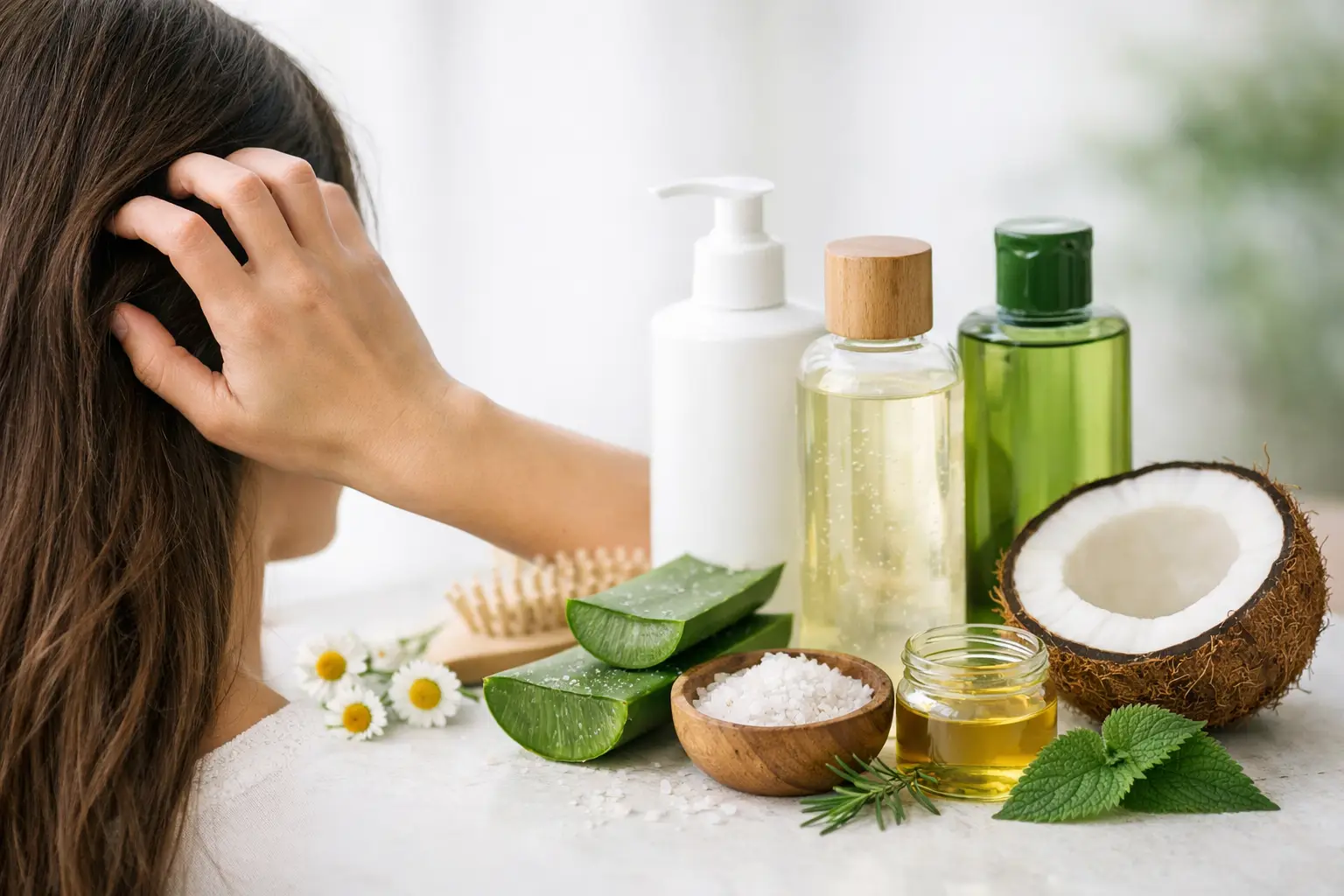
Look for formulas built around botanical oils, herbal extracts, and moisture-supporting ingredients. These tend to be especially helpful when the scalp feels both itchy and dry. Tea tree, peppermint, aloe vera, rosemary, neem, and herbal infusions are common choices because they are associated with scalp freshness, comfort, and a cleaner-feeling root area.
That said, natural does not automatically mean gentle for everyone. Essential oils can feel refreshing, but if they are used too heavily, they may be too intense for very sensitive skin. A well-made shampoo uses herbs and oils with restraint and purpose, not just for label appeal.
Ingredients worth looking for in a natural itchy scalp shampoo
A soothing shampoo starts with the right kind of cleansing base, but the support ingredients matter just as much. Aloe vera is one of the most reliable additions for a dry, uncomfortable scalp because it helps bring in hydration and a calmer feel after washing.
Tea tree oil is often chosen for itchy or flaky scalps because it leaves a refreshed, purified feeling. It can be especially useful if your scalp tends to feel oily and irritated at the same time. Peppermint has a similar appeal. It gives a cooling sensation that many people associate with relief, though very reactive scalps may prefer a milder formula.
Herbal oils and extracts such as rosemary, neem, and black seed oil can also support scalp care naturally. These ingredients are often included in formulas designed to nourish the scalp environment while helping hair feel stronger and healthier over time.
Moisture-supporting oils matter too. Coconut oil, jojoba oil, castor oil, and olive oil can help reduce the dry, stripped feeling that sometimes follows washing. In the right amount, they leave the scalp more comfortable without making hair feel heavy.
Ingredients that can make itching worse
If your scalp is already irritated, harsh cleansing agents are usually the first place to look. Some shampoos create that squeaky-clean feeling by removing too much oil too quickly. The result can be more itching, more flakes, and a scalp that never seems settled.
Heavy synthetic fragrance is another common issue. Even if a product smells clean, fragrance can be too much for a sensitive scalp. Alcohol-heavy formulas and shampoos overloaded with styling residue can also add to the problem.
This is where ingredient-conscious grooming becomes practical, not fussy. When you choose a shampoo that is built to nourish and hydrate as it cleanses, you are less likely to enter that cycle of wash, dryness, irritation, and repeat.
How to choose the right natural shampoo for your scalp type
A dry itchy scalp and an oily flaky scalp may look similar from a distance, but they usually need different support. If your scalp feels tight after washing and your flakes are small and dry, a moisture-focused herbal shampoo is often the better fit. You want something that cleans gently and restores softness.
If your scalp gets greasy quickly and flakes are larger or more persistent, you may do better with a natural shampoo that balances oil and helps lift buildup while still being gentle. In that case, herbs such as tea tree, rosemary, and neem may be more useful.
If you color your hair, wear protective styles, or use heavy pomades and beard products near the hairline, buildup may be part of the problem. A natural shampoo with scalp-clearing herbs can help, but frequency matters too. Washing too often can create a different kind of irritation.
Men managing both scalp and beard dryness should think about overlap. The same grooming habits that help facial hair feel softer, such as nourishing oils and gentler cleansing, often support a healthier scalp as well. The skin underneath the hair is where comfort begins.
How to use a natural shampoo for better results
Even the best formula can underperform if the washing routine is working against your scalp. Start by fully soaking the hair and scalp with lukewarm water. Hot water can feel good for a moment, but it often makes dryness worse.
Apply shampoo directly to the scalp, not just the hair. Use your fingertips to massage gently for at least a minute so the formula can loosen buildup and reach the skin where itching starts. Scratching with nails may feel satisfying in the moment, but it can leave the scalp more inflamed.
Rinse thoroughly. Residue from shampoo, conditioner, or styling products can keep the scalp irritated. If your scalp is very dry, avoid overwashing. Many people do better washing two to three times per week rather than daily, though it depends on oil production, activity level, and product use.
Pairing shampoo with a targeted scalp treatment can also make a difference, especially when flakes and itch have become persistent. A nourishing, anti-dandruff scalp treatment can help extend the comfort you get from washing and support a healthier scalp between wash days.
When natural shampoo helps, and when it may not be enough
A good natural shampoo can be a strong solution for common scalp discomfort tied to dryness, mild dandruff, and buildup. It can improve how the scalp feels day to day and reduce the triggers that keep itching active.
Still, there are situations where a shampoo alone may not solve the problem. If the scalp is red, sore, cracking, or producing thick scales, it may be time to speak with a medical professional. Persistent itching can sometimes point to eczema, psoriasis, fungal issues, or contact dermatitis that need more than over-the-counter care.
This does not make natural care less valuable. It simply means the best approach is the one that matches the cause. For many people, herbal hair care is an effective first step because it removes common irritants and restores a healthier baseline.
A simple standard for choosing well
When you are comparing products, the best natural shampoo is rarely the one with the longest ingredient story. It is the one that makes your scalp feel cleaner, calmer, and more balanced after repeated use. Relief should not come at the cost of dryness, and moisture should not leave the scalp coated or congested.
That is the standard worth keeping. Choose a shampoo that respects the scalp, uses botanical ingredients with purpose, and supports healthy hair from the root. Brands like Mimea Herb reflect that more restorative approach to grooming, where comfort, nourishment, and visible care work together.
A comfortable scalp tends to show up in small but meaningful ways – less scratching, fewer flakes, easier styling, and more confidence in your daily routine. That is often where natural hair care proves its value most clearly.
Leave a Reply