
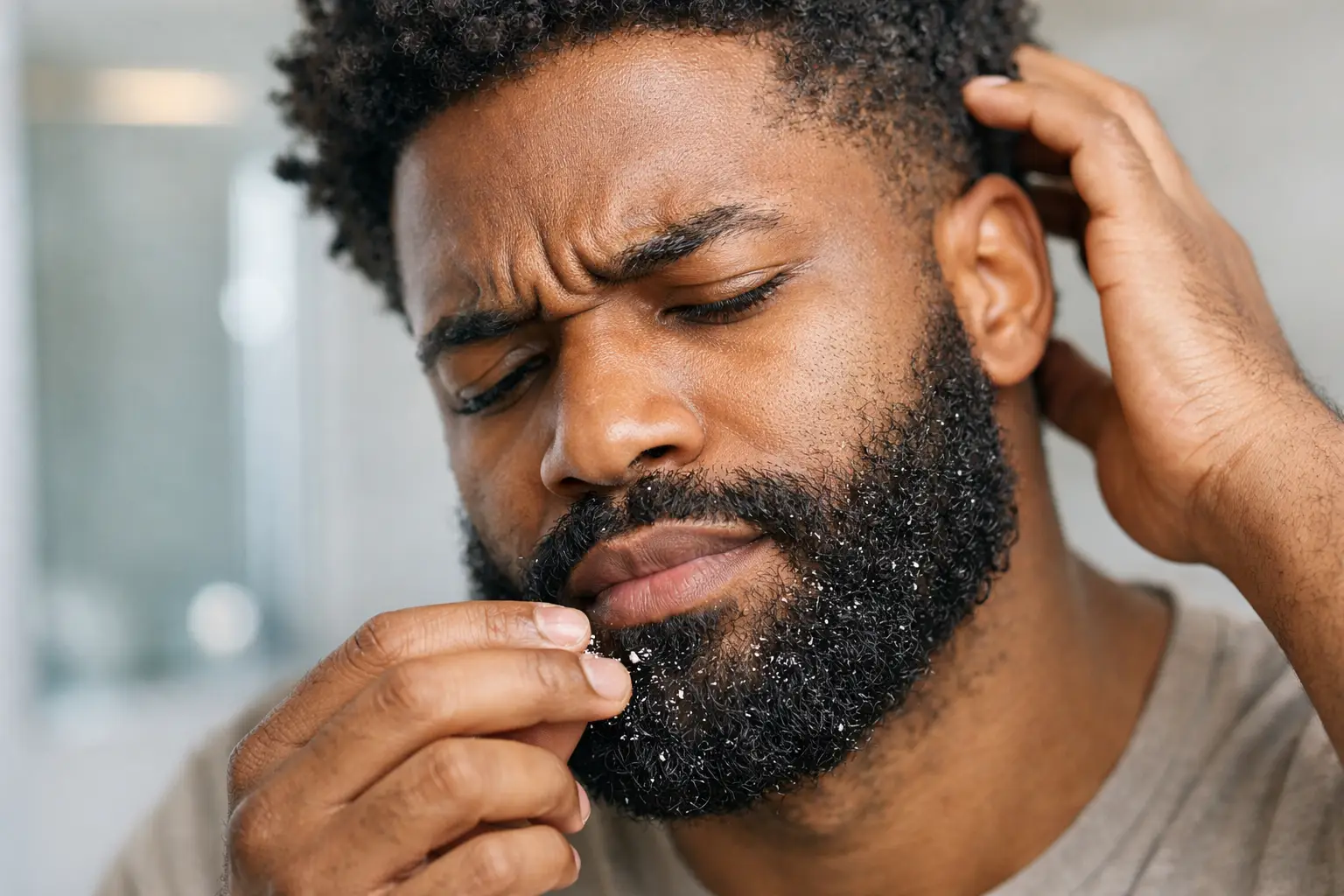
Those white flakes caught in a dark shirt collar are not always a sign of poor hygiene. When asking what causes beard dandruff, the answer is usually a combination of skin dryness, natural oil imbalance, grooming habits, and irritation beneath the beard. The hair may get the blame, but the skin underneath is where the problem begins.
Beard dandruff is common, especially when facial hair is thick, coarse, or growing longer. A beard can hold onto dead skin cells, sweat, oil, and product residue more easily than clean-shaven skin. With the right routine, most mild flaking can be reduced while keeping both beard hair and the skin beneath it comfortable and nourished.
What Causes Beard Dandruff Most Often?
Beard dandruff occurs when skin cells shed more noticeably than usual. Skin naturally renews itself, but flakes become visible when that process speeds up or when dry, irritated skin is unable to hold onto enough moisture. Several factors can contribute at the same time.
Dry skin beneath the beard
Dry skin is one of the most frequent causes of beard flakes. Hot showers, cold or low-humidity weather, harsh cleansers, and frequent washing can strip away the natural oils that help protect the skin barrier. Once the skin becomes dry, it may feel tight, itchy, or rough. Small white flakes often follow.
This is especially common for men who wash their beard with regular body soap or a strong shampoo. These products may remove dirt effectively, but they can also leave facial skin feeling depleted. A beard needs cleansing, but it also needs hydration afterward.
Natural oil and yeast imbalance
Some beard dandruff has more to do with excess oil than too little. The skin produces sebum, a natural oil that helps keep it soft and protected. When sebum builds up, a naturally occurring yeast called Malassezia can feed on those oils. For some people, this creates irritation, redness, itching, and greasy or yellowish flakes.
This pattern is often associated with seborrheic dermatitis, a common skin condition that can affect the beard, scalp, eyebrows, and sides of the nose. It is not caused by being unclean, and it can come and go based on stress, weather, skin sensitivity, and individual biology.
Product buildup
Beard balms, waxes, conditioners, styling products, and even beard oils can become part of the problem if they are applied too heavily or not washed out properly. Buildup can trap oil and dead skin cells against the face, making flakes more visible and leaving the beard feeling coated rather than healthy.
The solution is not to stop moisturizing altogether. Instead, use a modest amount of a lightweight, well-formulated beard oil and cleanse consistently with a gentle product. Skin that is dry may need more nourishment, while skin prone to oily flakes may benefit from a simpler routine and less product layering.
Infrequent cleansing and trapped debris
A beard collects more than most people realize: food particles, sweat after exercise, environmental debris, sunscreen, and natural oils. Without regular cleansing, these materials can accumulate beneath the hair and contribute to irritation.
How often to wash depends on your skin, activity level, beard density, and products used. Daily washing can be too drying for some people, while washing only occasionally may allow buildup to take hold. For many beards, gentle cleansing several times per week, plus a thorough rinse after sweating, is a balanced starting point.
Overwashing and rough grooming
There is a trade-off in beard care. Washing too little can lead to buildup, but washing too often with harsh products can damage the skin barrier. The same is true of grooming tools. Aggressive scrubbing, very hot water, or brushing a dry, tangled beard can inflame the skin and cause more flaking.
Use lukewarm water, massage cleanser in with fingertips rather than nails, and pat the beard dry with a clean towel. A beard comb or brush is useful for distributing natural oils and removing loose flakes, but it should not scrape or pull at the skin.
Skin sensitivity or contact irritation
Fragrance, alcohol-heavy formulas, certain preservatives, and strong essential oils can irritate sensitive facial skin. If flakes began after introducing a new balm, wash, dye, or styling product, contact irritation may be involved. You may also notice stinging, burning, redness, or small bumps.
Ingredient-conscious grooming is especially helpful here. Choose products designed to support hydration and scalp or skin comfort, and introduce one new product at a time. That makes it easier to identify what your skin responds to well.
Lifestyle and environmental factors
Stress, poor sleep, dehydration, seasonal shifts, and dry indoor heat can all make beard dandruff harder to manage. These factors do not cause flakes in every person, but they can weaken the skin’s ability to stay balanced. A routine that works in humid summer weather may need adjustment during a dry winter.
Diet alone is rarely the full answer, but overall nutrition and hydration support healthy skin function. If your beard and scalp are both persistently flaky, your routine may need attention beyond the beard itself.
How to Reduce Beard Dandruff Without Overdoing It
A consistent, gentle routine usually works better than a shelf full of products. Begin by cleansing the beard with a mild, hydrating wash that removes daily buildup without leaving the skin stripped. Work it through the beard to reach the skin underneath, then rinse thoroughly.
After washing, dry the beard gently and apply a small amount of beard oil while the hair is slightly damp. This helps seal in moisture and softens coarse hair, making it easier to groom without friction. Focus on the skin first, then distribute the remaining oil through the beard with your hands or a clean comb.
For visible flakes, gentle exfoliation can help loosen dead skin cells. Limit this to once or twice a week, and avoid abrasive scrubs that leave the face sore or red. A soft beard brush used with a light touch may be enough for many people.
A practical routine may include these four habits:
- Cleanse regularly with a gentle beard or facial cleanser.
- Use lukewarm water instead of long, hot showers.
- Nourish the skin under the beard with a lightweight oil after cleansing.
- Wash combs, brushes, pillowcases, and towels regularly to reduce residue and debris.
Natural oils and botanical ingredients can be valuable when they are chosen for skin comfort rather than used as a quick fix. Hydrating oils can help soften the beard and support a more comfortable skin barrier. However, natural does not automatically mean irritation-free. Patch test a new formula, especially if your skin is reactive or you have a history of fragrance sensitivity.
When Beard Flakes May Need More Than Home Care
Mild dryness often improves within a few weeks of better cleansing and hydration. But persistent dandruff deserves a closer look. Consider speaking with a dermatologist if flakes are thick, yellow, oily, painful, spreading, or accompanied by significant redness, swelling, cracking, hair loss, or bleeding.
A professional can help distinguish ordinary dry skin from seborrheic dermatitis, eczema, psoriasis, fungal infection, or allergic contact dermatitis. The right treatment depends on the cause. For example, a richer oil may help simple dryness but may not be enough when yeast-related irritation is driving the problem.
If you use an over-the-counter anti-dandruff treatment on the beard area, follow the label carefully and avoid getting it in the eyes, mouth, or broken skin. Facial skin can be more sensitive than the scalp, so less is often more.
A Healthier Beard Starts at the Skin
A full beard looks its best when the skin beneath it feels balanced, not tight, itchy, or coated in residue. Rather than chasing flakes with harsh scrubs or frequent washing, focus on steady care: cleanse gently, hydrate consistently, and pay attention to how your skin responds.
Mimea Herb approaches beard care as support for both hair and skin, with botanical nourishment that helps promote softness, comfort, and a more confident grooming routine. Small, consistent adjustments can make the beard easier to maintain and the skin beneath it noticeably calmer.
Leave a Reply