
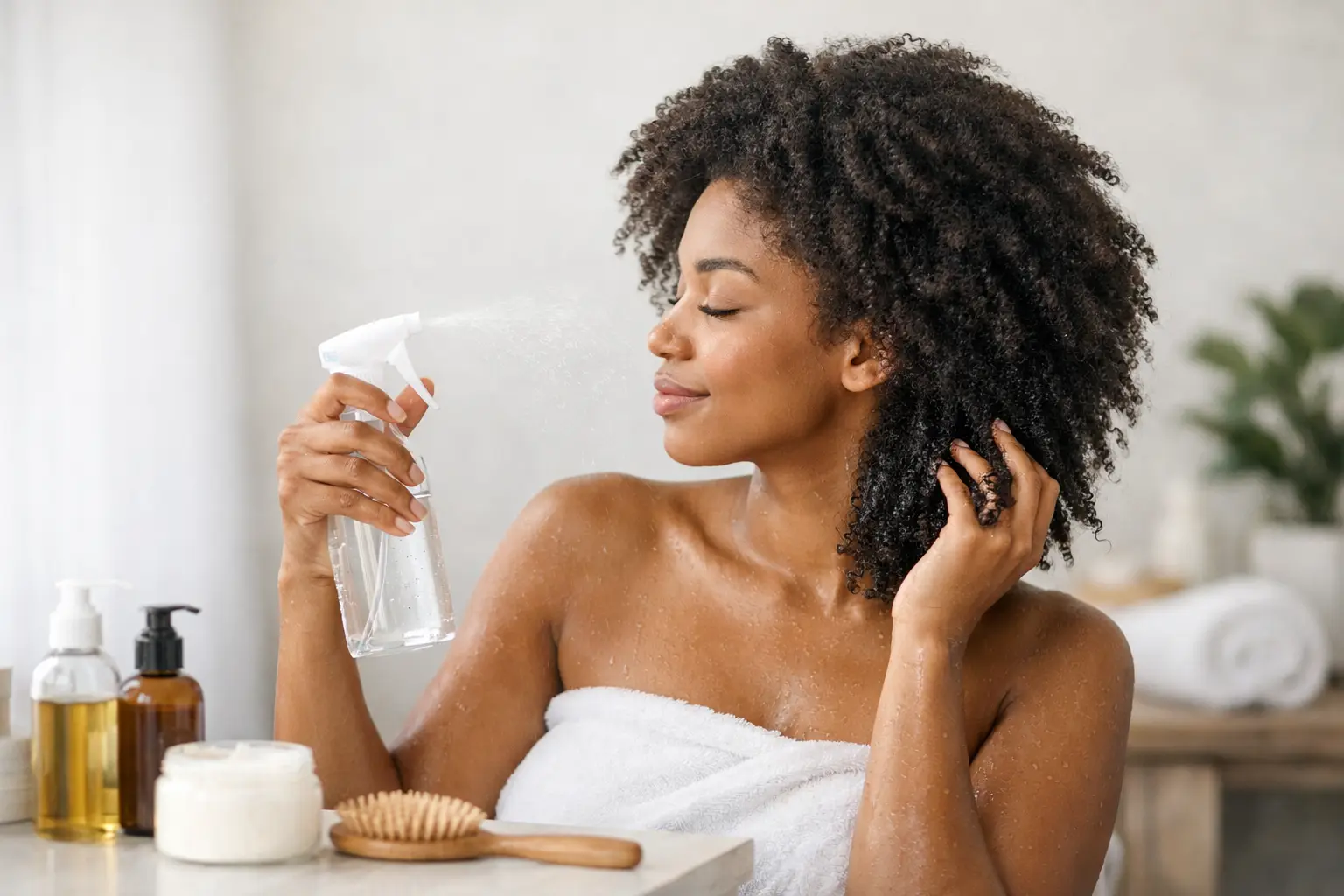
Dry natural hair usually tells on itself fast – rough texture, dullness, tangles, and breakage that seems to show up no matter how careful you are. If you are trying to learn how to hydrate dry natural hair, the goal is not just to add moisture for a day. It is to help your hair take in water, hold onto it longer, and stay protected between wash days.
Natural hair needs a different kind of attention because its bends, coils, and curls make it harder for the scalp’s natural oils to travel down the strand. That does not mean dry hair is unhealthy by default. It does mean your routine has to work with your texture instead of against it.
What dry natural hair really needs
Hydration and oil are not the same thing. This is where many routines go off track. Water hydrates the hair. Oils and butters help slow down moisture loss, but they cannot replace water on their own.
If your hair feels greasy but still brittle, that is often a sign that it has been coated without being properly hydrated. A stronger routine starts with water-based care, then follows with nourishing ingredients that help seal and soften.
Hair porosity matters too. Low-porosity hair often resists moisture at first and can feel product-heavy quickly. High-porosity hair tends to absorb water fast but lose it just as quickly. Knowing this helps you choose products and techniques that fit your hair instead of copying someone else’s routine and hoping for the same result.
How to hydrate dry natural hair at wash day
Wash day sets the tone for the rest of the week. If your shampoo strips too much or your conditioner does not provide enough slip and softness, your hair starts behind.
Begin with a gentle cleanse. Product buildup, sweat, and scalp debris can block moisture from reaching the hair effectively. A nourishing shampoo with herbal or plant-based ingredients can clean the scalp without leaving the strands feeling harsh or squeaky. That balance matters. Clean hair accepts moisture better, but over-cleansed hair dries out faster.
After cleansing, apply a rich conditioner while the hair is still very wet. This is not the moment to rush. Work in sections so each part of the hair gets coated evenly. Let the conditioner sit long enough to soften the strands and improve manageability. If your hair is especially dry, using gentle heat from a warm towel or steamy shower can help the conditioner penetrate better.
Detangling during conditioning also helps reduce breakage. Dry hair snaps more easily, so always handle it when it has slip and support. If your ends feel rougher than the rest of your hair, give them extra attention. They are the oldest part of the strand and usually the first to lose moisture.
Deep conditioning makes a visible difference
When dryness keeps coming back, a regular conditioner may not be enough. Deep conditioning gives the hair more time with softening, hydrating ingredients.
A good deep treatment should leave your hair feeling more flexible, not coated or stiff. Ingredients such as aloe vera, glycerin, honey, and botanical oils can support hydration, while nourishing plant extracts help improve softness and resilience. Protein can help in some cases, especially if the hair is weak or overly limp, but too much protein on already dry hair can make it feel harder. That is one of those areas where it depends on your hair’s current condition.
Daily moisture is about balance, not overload
One of the most effective answers to how to hydrate dry natural hair is to stop treating moisture like a one-time event. Hair often needs small, consistent support between wash days.
Start with a water-based leave-in conditioner or moisturizing cream. Apply it to damp hair, not bone-dry hair, so the product has moisture to work with. Then follow with a light oil or butter if your hair benefits from sealing. The right amount depends on your texture and porosity. Fine natural hair may do better with lighter oils, while thicker, coarser strands may need richer creams or butters.
What matters most is not layering five products just because a method says so. If your hair feels soft, hydrated, and manageable with fewer steps, that is enough. Heavy layering can create buildup and make the hair harder to refresh.
Refreshing dry hair without starting over
By midweek, natural hair often needs moisture again, especially in dry climates or during colder months. A simple refresh can help restore softness without a full wash day.
Lightly mist the hair with water or apply a small amount of leave-in to your hands and smooth it through the driest sections. Focus on ends and areas that lose moisture fastest. Then reseal lightly if needed. The goal is to revive, not saturate the hair with product until it feels weighed down.
If your hair is in twists, braids, or another protective style, hydration still matters. Moisturizing the length and paying attention to the scalp helps prevent dryness from building underneath the style.
Protecting moisture matters as much as adding it
Hair can be hydrated in the morning and dry again by night if it is not protected. Friction, dry air, heat, and rough handling all pull moisture away.
Sleeping on cotton pillowcases can create friction and absorb moisture from the hair. Satin or silk wraps, scarves, or pillowcases help reduce that moisture loss and minimize frizz. This is one of the simplest changes with the most consistent payoff.
Protective styling can also help, but only if the style is not too tight and the hair underneath is cared for. Styles that reduce daily manipulation give the strands a break, which helps preserve softness and length retention. Still, leaving hair tucked away without moisturizing it can lead to dryness that shows up later as breakage.
Heat styling is another factor. Occasional heat may fit your routine, but frequent use without protection can quickly dehydrate natural hair. If you use blow dryers or flat irons, always apply a heat protectant and keep temperatures moderate. Healthy moisture levels are easier to maintain when heat is not constantly undoing your progress.
Do not ignore the scalp
Dry hair and an uncomfortable scalp often show up together. If the scalp is itchy, flaky, or irritated, it can affect your routine and your results.
A healthy scalp supports healthier-looking hair. That means keeping it clean, avoiding harsh products, and using targeted scalp care when needed. Herbal and oil-based scalp treatments can help soothe dryness and discomfort, especially when used consistently rather than only when irritation becomes noticeable.
That said, scalp dryness is not always solved by adding more oil. Sometimes the issue is buildup, overwashing, or sensitivity to certain ingredients. If flakes persist despite moisturizing, it may be time to simplify your routine and focus on gentle cleansing and scalp-friendly care.
Ingredients that support hydration
When choosing products, look beyond marketing claims and pay attention to function. Water should be near the top of the ingredient list in moisturizing products. Humectants such as glycerin, aloe vera, and honey help attract moisture, while oils and butters help soften and seal.
Botanical ingredients can be especially helpful when they are included with a purpose. Herbal shampoos, nourishing oils, and scalp treatments should support real outcomes like softness, comfort, and reduced dryness. That practical approach is what makes plant-based care effective rather than simply appealing.
Mimea Herb reflects this kind of ingredient-conscious care by focusing on nourishment, hydration, and scalp comfort through herbal solutions that fit everyday grooming needs.
Common mistakes that keep hair dry
Sometimes the problem is not a lack of effort. It is a routine that works against the hair. Using harsh shampoos too often, skipping conditioner, applying oils without water, and overusing heat are some of the most common reasons dryness lingers.
Another issue is changing products too quickly. Hair usually needs some consistency before you can tell whether a routine is helping. If you switch everything at once, it becomes hard to know what is working and what is making the dryness worse.
There is also the matter of expectations. Even the best routine will not make dry, damaged hair feel perfect overnight. Hydration improves with steady care, gentle handling, and products that support the hair’s natural structure instead of fighting it.
A routine that feels sustainable
The best routine for dry natural hair is one you can actually maintain. That might mean washing weekly, deep conditioning twice a month, moisturizing every few days, and protecting the hair at night. It might also mean adjusting with the seasons, because hair often needs more support in winter and less heavy product in humid weather.
If your hair responds well, keep going. If it still feels brittle, look at the full picture – cleanse, condition, moisture, protection, scalp care, and product buildup. Dryness is rarely caused by just one thing.
Healthy hydration is not about making your routine more complicated. It is about giving your hair what it can use, in the right order, with enough consistency to see the change. When natural hair is properly hydrated, it feels softer, handles better, and looks more alive. That is the kind of care that builds confidence one wash day at a time.
Leave a Reply