
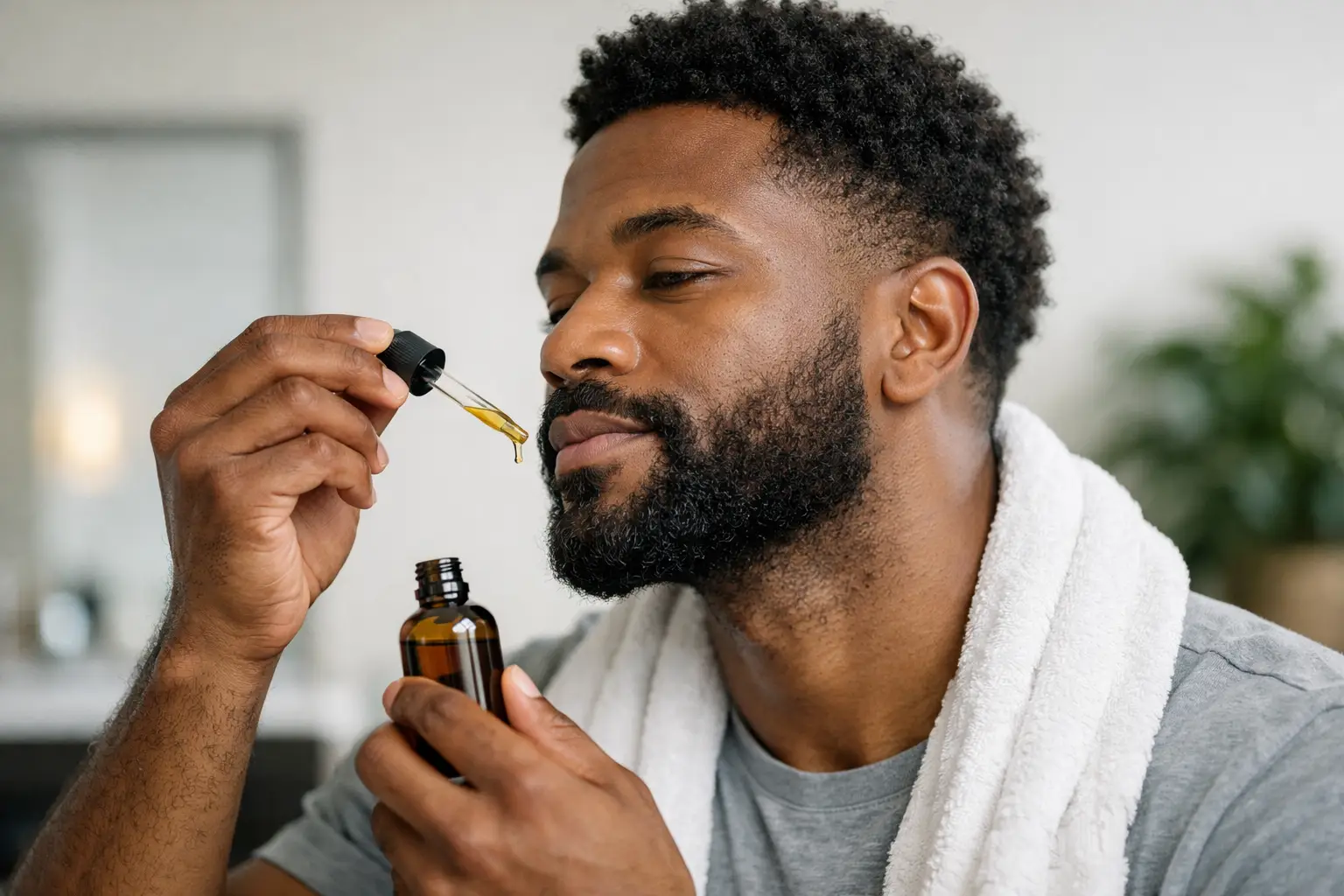
A beard can look full on the surface and still feel dry underneath. That usually starts at the skin. If you’re wondering how to apply beard growth oil, the goal is not just to coat the hair. It’s to nourish the beard and the skin beneath it so your routine supports softer texture, better comfort, and healthier-looking growth over time.
Beard oil works best when application is intentional. Using too much can leave the beard greasy. Using too little, or applying it only to the outer layer, often means the areas that need the most support never get enough hydration. A few small adjustments in timing, amount, and technique can make the product work much harder for you.
Why application matters
Beard growth oil is usually chosen for practical reasons. Men want relief from dryness, itching, rough texture, and the uneven look that comes when beard hair is brittle or hard to manage. The right oil can help soften the beard, support moisture balance, and improve the overall condition of the skin under it.
But results depend on more than the formula alone. Beard hair can block product from reaching the skin, especially as the beard gets thicker. That means application matters just as much as the ingredients. A careful routine helps distribute oil evenly, reduces waste, and gives the beard a healthier finish without feeling heavy.
This is also where expectations should stay realistic. Beard growth oil can support the environment for healthy growth by nourishing hair and skin, reducing breakage, and improving manageability. It cannot change your genetics. If your beard grows unevenly, oil may help it look and feel better, but it is not a guarantee of dramatic new growth in every sparse area.
How to apply beard growth oil step by step
The best time to apply beard growth oil is after washing your face or showering, when the beard is clean and slightly damp. At that point, the hair is softer, the skin is fresh, and the oil spreads more easily. You do not want the beard dripping wet. Slightly damp is enough.
Start with a small amount in your palm. For short beards, 2 to 3 drops is often enough. Medium beards may need 4 to 6 drops. Longer or fuller beards may need more, but it is better to begin conservatively and add another drop or two if needed. The right amount depends on beard density, hair texture, and how dry your skin feels.
Rub the oil between your palms and fingers to warm it. This helps it spread evenly instead of landing in one concentrated spot. Then work your hands through the beard with gentle pressure, moving from the cheeks down to the chin and jaw.
The key is to reach the skin beneath the beard. Use your fingertips to massage the oil inward, not just over the surface. This is especially important if you deal with itchiness, flaking, or tightness under the beard. A light massage also helps distribute the oil across areas that are easy to miss, like under the chin and along the jawline.
Once the skin is covered, use your palms to smooth the rest through the beard hair. Then finish with a beard comb or brush if you use one. That last step helps with even distribution and gives the beard a neater shape.
How much oil should you use?
This is where many routines go off track. More oil does not always mean better results. If your beard feels slick for hours or looks shiny in a way that seems heavy, you are probably using too much. If it still feels rough shortly after application, you may need a little more.
Short beards usually need less because there is less hair to coat and less distance to reach the skin. Longer beards often need more product, but not always dramatically more. Coarse hair may absorb oil faster than finer hair, and dry climates may increase how much your beard needs.
It helps to judge by feel rather than by habit alone. A properly oiled beard should feel softer, more flexible, and easier to groom. It should not feel sticky, greasy, or weighed down.
When to use beard growth oil
For most men, once a day is enough. Morning application is common because it helps control texture and keeps the beard looking healthy throughout the day. If your beard is especially dry, or if you live in a cold or low-humidity climate, a second light application later in the day may help.
After cleansing is usually the best time. If you use a harsh face wash or wash the beard too often, you may strip away natural oils and create a cycle of dryness. That makes beard oil more necessary, but it also means your cleansing routine may need adjustment.
Nighttime use can work well too, especially if your beard tends to feel dry by evening. A lighter application before bed can support overnight conditioning without making the beard overly coated.
Common mistakes that limit results
One of the most common mistakes is applying beard growth oil to a dirty beard. When sweat, dead skin, and product buildup are sitting on the surface, oil cannot do its best work. Clean skin and clean hair create a better foundation.
Another mistake is treating beard oil like a surface finisher only. If you smooth it over the top and stop there, the skin underneath may stay dry. That often leads to persistent itch, flakes, and roughness even when the beard looks polished for a short time.
Using too much is another issue. Excess oil can sit on the beard, attract dust, and make grooming feel less fresh. It can also discourage consistency if the routine starts to feel messy.
Impatience matters too. Beard care is cumulative. A single application can improve softness right away, but healthier-looking results usually come from daily use over time. If your beard is currently dry, brittle, or uncomfortable, give the routine time to restore balance.
How to apply beard growth oil for your beard type
A short beard or stubble needs a skin-first approach. Because the hair is minimal, the main benefit often comes from reducing dryness and irritation close to the surface. Use fewer drops and focus on a thorough fingertip massage.
A medium beard needs balance. You want enough oil to reach the skin and condition the visible beard without overdoing it. This is often the stage where men notice the biggest difference from consistent use because the beard starts to feel noticeably softer and easier to shape.
A long or dense beard needs sectioning. Instead of applying all at once and hoping it spreads, work in stages. Massage oil into one area, then move to the next. This helps prevent the outer beard from getting overloaded while the deeper layers stay dry.
Curly or coarse beard hair may need a bit more product and a little more time to work through. Straight or fine beard hair usually needs less. It depends on how quickly the hair absorbs oil and how your beard looks a few minutes after application.
What to look for in a beard growth oil
Ingredient quality matters because beard oil sits close to both skin and hair. A well-made formula should help hydrate, nourish, and support comfort without feeling harsh or overly perfumed. Plant-based and herbal oils are often chosen by men who want a more restorative routine and better ingredient awareness.
Look for formulas that align with your needs. If dryness and roughness are the issue, nourishment and moisture support matter most. If your skin feels itchy or easily irritated, a gentler formula may be the better fit. If your beard feels weak or looks dull, consistent conditioning can improve how it behaves and how healthy it appears.
Mimea Herb approaches beard care with that balance in mind, pairing natural care with practical performance so the routine supports both comfort and visible results.
How long does it take to notice a difference?
Softness and manageability can improve quickly, sometimes after the first few uses. Skin comfort often improves within days if dryness is the main issue. A healthier overall appearance takes more consistency. If your beard has been neglected, damaged, or chronically dry, visible improvement may take a few weeks of steady use.
Growth-related expectations should stay grounded. Beard growth oil supports the beard environment. It helps reduce the problems that make growth look weaker, such as breakage, roughness, and poor moisture balance. It does not create overnight fullness. What it can do is help your beard look better cared for, feel more comfortable, and maintain a stronger, healthier appearance over time.
A good beard routine should feel simple enough to repeat. Apply the oil to a clean, slightly damp beard, work it down to the skin, and let consistency do the rest. When the beard is nourished at the root and softened through the length, daily grooming feels less like maintenance and more like care.
Leave a Reply