A beard that feels rough by noon, flakes onto your shirt, or pulls at the skin underneath is usually asking for one thing – moisture. That is where beard oil benefits become easy to notice. The right oil does more than add shine. It helps support the skin, soften coarse hair, reduce daily discomfort, and make a beard easier to maintain without feeling heavy or greasy.
For many men, the first change is not how the beard looks. It is how it feels. Dryness, itchiness, stiffness, and irritation tend to build slowly, especially in colder weather, dry indoor air, or after washing with harsh cleansers. A well-made beard oil helps restore balance by bringing hydration and nourishment back to both the beard and the skin beneath it.
Why beard oil benefits start with the skin
A beard sits on top of skin that still needs care. That part often gets missed. When the skin under facial hair becomes dry, the beard usually follows. You may notice tightness, flaking, irritation, or a rough texture that makes the entire beard feel harder to manage.
This is why beard oil is not just a styling product. It is a skin-support product as well. Botanical oils can help condition the surface of the skin, reduce moisture loss, and create a more comfortable environment for beard growth. When the skin is calmer and better hydrated, the beard often looks healthier too.
There is a practical benefit here. If you only treat the hair, you may get temporary softness on the outside while the dryness underneath continues. Applying oil down to the skin helps address the root of the problem, not just the visible symptom.
The most noticeable beard oil benefits
One of the clearest benefits is softness. Beard hair is often thicker and more wiry than the hair on your scalp, so it tends to feel dry faster. Beard oil helps smooth the hair shaft, making the beard feel less coarse and more comfortable throughout the day. This can make a short beard feel neater and a longer beard feel much easier to shape.
Another major benefit is relief from beard itch. This is especially common in early growth stages, when new beard hair and dry skin create irritation at the same time. A lightweight oil can help reduce that scratchy, uncomfortable feeling by supporting moisture where it is needed most.
Beard oil can also help with visible flaking. What many people call beard dandruff is often simple dryness. When the skin under the beard lacks moisture, tiny flakes become trapped in facial hair and show up on darker clothing. Consistent use of beard oil may help reduce that flaking by keeping the skin conditioned.
Shine is another benefit, but it works best when it looks natural. A good beard oil should not make the beard appear overly slick. Instead, it gives hair a healthier-looking finish, which can make the beard appear fuller, smoother, and better cared for.
Then there is manageability. A beard that has been hydrated is easier to comb, easier to shape, and less likely to feel unruly. This matters whether you keep your beard closely trimmed or wear it longer. Softer hair typically means fewer snags, less frizz, and a cleaner overall appearance.
Beard oil benefits for healthy-looking growth
Beard oil does not change your genetics, and it is worth being clear about that. If someone promises instant thickness or dramatic new growth from oil alone, that claim deserves caution. Still, beard oil can support healthier-looking growth conditions, which is different and more realistic.
Dry, irritated skin is not an ideal foundation for a beard. If the skin beneath your beard is uncomfortable, inflamed, or neglected, growing and maintaining facial hair can feel harder than it should. Oil helps create a better environment by keeping the skin nourished and the hair conditioned as it grows.
This can make the beard look fuller over time, not because each follicle suddenly changes, but because the hair is less brittle, less rough, and less prone to looking dull or uneven. Some natural oils also help improve the appearance of elasticity and softness, which can reduce breakage in longer beard hair.
In other words, beard oil supports the quality of the beard you are able to grow. For many men, that makes a visible difference.
What ingredients make a difference
Not every beard oil performs the same way. The ingredient blend matters, especially if your skin is sensitive or your beard tends to run dry. Plant-based carrier oils are usually the foundation of an effective beard oil because they do the real conditioning work.
Lighter oils can help soften without leaving a heavy finish, while richer oils can offer more lasting nourishment for thicker or drier beards. Herbal and botanical ingredients may also support comfort, especially when the goal is to calm irritation or help the beard feel healthier with regular use.
The key is balance. An oil that is too heavy may sit on top of the beard and feel greasy. One that is too light may disappear quickly and not provide enough conditioning. If you have a short beard or oil-prone skin, a lighter formula may be enough. If your beard is coarse, dense, or exposed to dry weather, you may need something more nourishing.
Fragrance is another consideration. Essential oils can add a pleasant scent, but more is not always better. If your skin is reactive, strongly fragranced formulas may be less comfortable than a simpler, ingredient-conscious blend.
How to use beard oil for better results
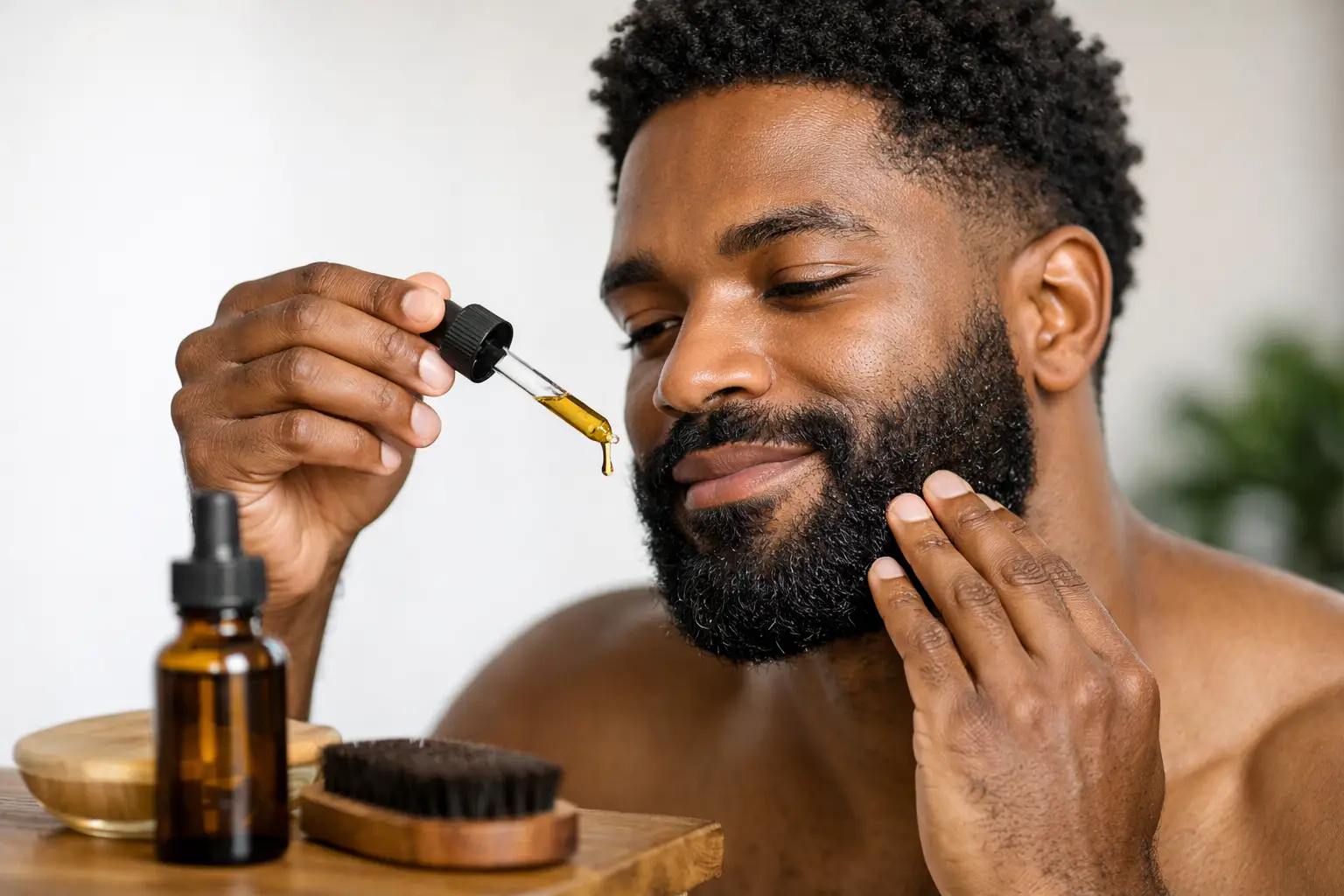
Application is simple, but technique matters. Beard oil works best on a clean, slightly damp beard because that is when it can help seal in moisture rather than just sit on dry hair. A few drops warmed between the palms are often enough for shorter beards, while longer or fuller beards may need more.
The important step is working the oil into the skin first, then through the beard. Many people only smooth it across the surface. That helps appearance, but it does less for itch, dryness, and flaking. Taking a moment to massage the oil underneath the beard usually gives better comfort and more complete care.
After that, use your hands, a comb, or a beard brush to distribute the product evenly. This helps avoid patchy application and gives the beard a more groomed finish. Daily use is common, but the ideal frequency depends on your skin, climate, and washing routine.
If your beard still feels dry by midday, that may be a sign to increase the amount slightly or switch to a more nourishing formula. If it feels greasy after application, use less. Good beard care is often about adjustment, not excess.
When beard oil helps most
Some people notice beard oil benefits almost immediately, especially if dryness is the main issue. Others see more of a gradual improvement over a couple of weeks as the beard becomes softer, calmer, and easier to maintain.
It tends to be especially helpful during seasonal changes, after trimming, during early beard growth, or any time the skin feels tight and uncomfortable. Men with medium to long beards often benefit from it the most because longer hair has a harder time staying naturally conditioned from root to tip.
That said, shorter beards benefit too. In fact, beard itch and skin irritation can be most frustrating in the early stages, when growth is new and the skin is adjusting. A simple daily oil routine can make that stage much easier to manage.
For men looking for a natural, results-oriented grooming routine, products built around botanical nourishment often make the most sense. That is part of why brands like Mimea Herb focus on herbal care that supports hydration, comfort, and healthy-looking maintenance instead of relying on cosmetic claims alone.
Are there any trade-offs?
There can be. Beard oil is helpful, but it is not one-size-fits-all. If you use too much, the beard may feel overly slick. If the formula contains irritating fragrance or poor-quality ingredients, sensitive skin may react. And if beard dandruff is actually caused by a more persistent skin condition rather than simple dryness, oil may help comfort but may not solve the underlying issue on its own.
It also works best as part of a broader routine. Washing with a harsh cleanser and then applying oil may not give the same result as using gentle cleansing, regular conditioning, and consistent grooming habits together. Beard oil is effective, but it does not have to do all the work by itself.
The best approach is realistic and steady. Choose a well-balanced formula, apply it consistently, and pay attention to how your skin and beard respond.
A beard should feel as healthy as it looks. When care starts with hydration, comfort, and ingredient quality, the daily difference becomes easier to see in the mirror and easier to feel every time you run your hand through it.
Leave a Reply