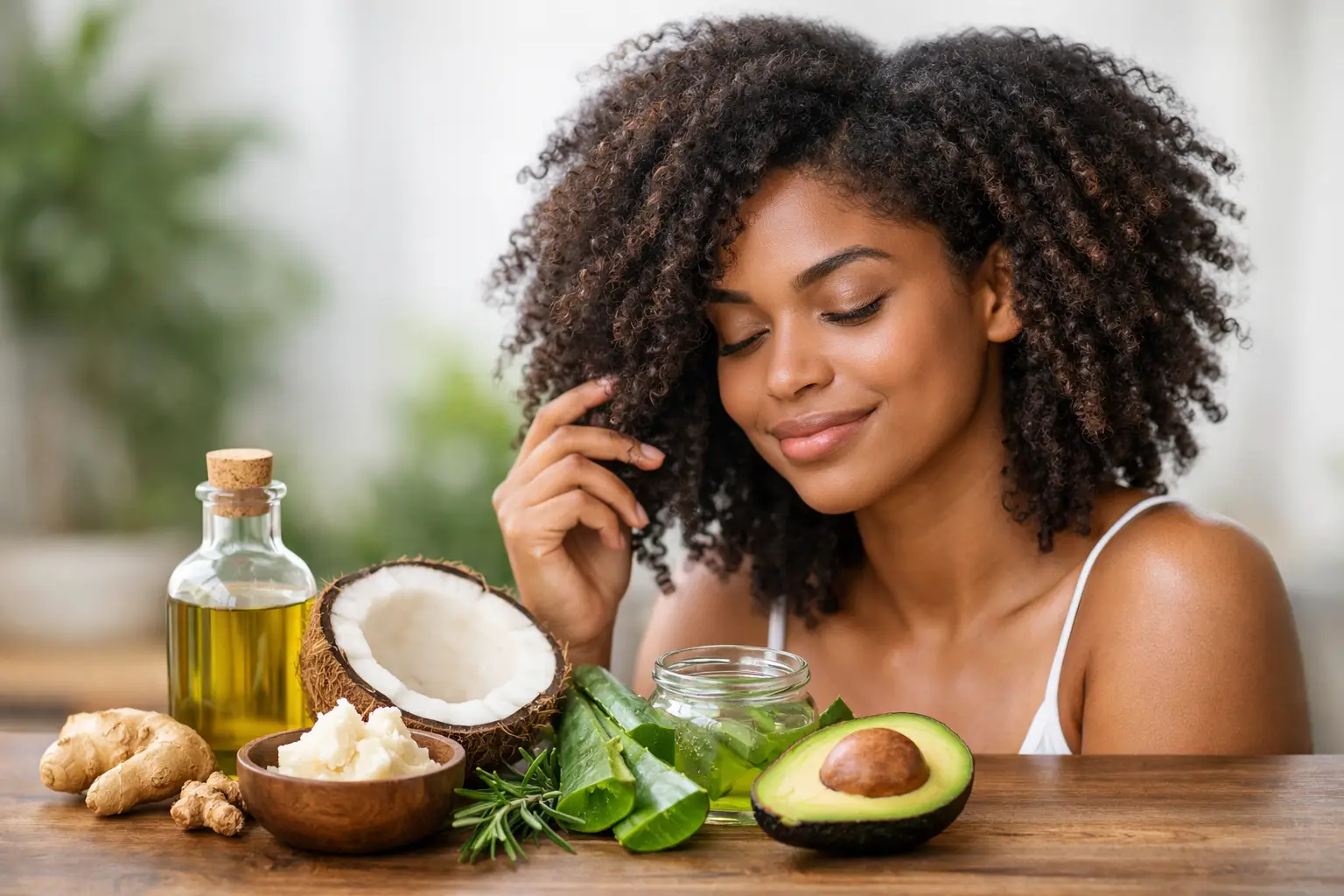
A dry, itchy scalp can make healthy hair feel out of reach long before breakage becomes obvious. That is why natural ingredients for healthy hair growth matter most at the root level – where scalp comfort, moisture balance, and follicle support work together to create better conditions for stronger hair.
Hair growth is not usually about one miracle ingredient. It is about consistency, scalp health, and using ingredients that support the hair cycle without creating more irritation. For many people, especially those dealing with dryness, dandruff, weak strands, or patchy beard growth, the best natural approach is one that nourishes first and stimulates second.
Why natural ingredients matter for healthy hair growth
Healthy growth starts with the environment around the follicle. When the scalp is inflamed, overly dry, congested with buildup, or stripped by harsh cleansers, hair can become brittle and the growth process can feel slower. Natural oils, herbs, and plant extracts can help restore that environment by hydrating the skin, softening buildup, and supporting a more balanced scalp.
That does not mean every natural ingredient is automatically gentle or right for every person. Some essential oils can be too strong if they are overused. Some heavier oils can sit on fine hair and make it look flat. The benefit comes from choosing the right ingredients for your needs, then using them in a formula that is balanced and practical enough to stick with.
The best natural ingredients for healthy hair growth
Rosemary
Rosemary has earned its reputation for a reason. It is often used to support circulation at the scalp, which may help create a healthier foundation for growth. It is also valued for helping refresh the scalp without relying on aggressive ingredients.
If your main concern is slow growth or thinning around the hairline or beard area, rosemary is one of the most useful botanicals to look for. It tends to work best when used consistently in scalp oils, growth oils, or well-formulated cleansers rather than as an occasional treatment.
Peppermint
Peppermint delivers a cooling sensation that many people associate with a cleaner, fresher scalp. Beyond that feel, it can help energize the scalp environment and reduce the discomfort that often comes with dryness or itchiness.
There is a trade-off here. Peppermint can feel too intense on sensitive skin if the formula is not properly diluted. For people with an already irritated scalp, comfort should come first. A milder herbal treatment may be the better starting point.
Castor oil
Castor oil is widely used for hair and beard care because it is rich, protective, and deeply conditioning. It helps reduce dryness, improves softness, and can make fragile hair feel more resilient. When breakage is part of the problem, that matters. Hair that stays intact looks fuller and grows with less interruption.
The downside is texture. Castor oil is thick, and not everyone enjoys that weight. It tends to suit coarse, curly, textured, or very dry hair better than fine hair unless it is blended with lighter oils.
Coconut oil
Coconut oil is valued for its ability to reduce protein loss in hair, which helps strands stay stronger over time. It is especially useful for dry or damaged hair that breaks easily during washing or grooming.
Still, coconut oil is not universal. Some people find it leaves their hair stiff or heavy, particularly if they have low-porosity hair. It is a strong option for nourishment, but it works best when the hair responds well to richer moisture.
Jojoba oil
Jojoba oil is often one of the easiest oils to live with. It is lightweight, helps soften the scalp, and supports moisture without leaving a greasy finish. Because it closely resembles the skin’s natural oils, it can be especially helpful for people trying to balance dryness and buildup at the same time.
For beard care, jojoba is particularly useful. It conditions both the beard hair and the skin underneath, which can reduce flaking, tightness, and that rough, brittle feel that makes growth uncomfortable.
Aloe vera
Aloe vera is less about stimulation and more about relief. It helps calm irritation, ease dryness, and support hydration at the scalp. If itching, sensitivity, or dandruff-like discomfort is getting in the way of a healthy routine, aloe can make the scalp easier to manage.
That matters because a comfortable scalp is easier to care for consistently. When washing, moisturizing, and treatment steps stop feeling harsh, people are more likely to stay with the routine long enough to see results.
Tea tree oil
Tea tree oil is commonly used when dandruff, itchiness, or excess oil are part of the picture. It helps purify the scalp and can support a cleaner feeling between washes. In anti-dandruff care, it is one of the most practical plant-based ingredients available.
Like peppermint, concentration matters. Too much can be drying or irritating. In a balanced scalp treatment, though, tea tree can be extremely useful for people whose growth goals are being slowed by scalp discomfort and flaking.
Black seed oil and herbal blends
Black seed oil, along with herbs such as nettle, fenugreek, and amla, is often chosen for overall nourishment. These ingredients are popular in traditional hair care because they support scalp comfort, moisture, and hair strength all at once.
This is where blends often outperform single-ingredient solutions. Hair growth concerns rarely come alone. Dryness, inflammation, breakage, and poor softness usually overlap. A thoughtful herbal formula can address several of those issues in one step.
Scalp health comes before length
People often focus on what will make hair grow faster, but faster is not always the first problem to solve. If the scalp is flaky, inflamed, or stripped, growth support should start with repair. The same is true for beard care. If the skin underneath is irritated, beard oil is not just about shine – it is about creating a healthier base for more even, comfortable growth.
A healthy scalp routine usually includes three things: gentle cleansing, regular nourishment, and targeted treatment when issues like dandruff or itching show up. Skip one of those, and results can stall. Clean too aggressively, and you lose moisture. Moisturize without cleansing properly, and buildup can increase. Treat flakes without restoring hydration, and the scalp can still feel stressed.
How to choose the right natural ingredients for healthy hair growth
Start with your main issue. If dryness and breakage are your biggest concerns, richer oils like castor or coconut may help more than cooling stimulants. If your scalp feels itchy or flaky, aloe vera and tea tree may be more useful. If you want a balanced daily option for beard care or scalp hydration, jojoba is often a safer fit.
It also helps to think in terms of product type. A shampoo should cleanse without stripping. A scalp oil should nourish without clogging or overwhelming the skin. A targeted treatment should calm specific issues like dandruff, irritation, or patchy growth support. The ingredient matters, but so does the form it comes in.
This is where brands focused on practical herbal care stand apart. At Mimea Herb, the value of botanical grooming is not in making big promises. It is in pairing nourishing herbs and oils with real everyday needs like hydration, scalp comfort, reduced flaking, and stronger-feeling hair.
What results actually look like
Natural care tends to work in stages. First, the scalp feels calmer. Then dryness, itching, or rough texture begin to improve. After that, hair often becomes easier to manage, with less breakage and better softness. Visible growth may come later, and it depends on factors like genetics, stress, overall health, and how consistent your routine is.
That realistic view matters. Natural ingredients can support healthier growth, but they cannot override every cause of hair loss or scalp trouble. If shedding is sudden, severe, or tied to a medical issue, a product alone may not solve it. Good care supports the process. It does not replace diagnosis when something deeper is going on.
The most effective routine is usually the one you can maintain without irritation, confusion, or product overload. When your scalp feels balanced and your hair stays nourished, growth has a better chance to follow. Start with ingredients that solve the discomfort you feel now, and healthier hair often becomes a more reachable result.
Leave a Reply