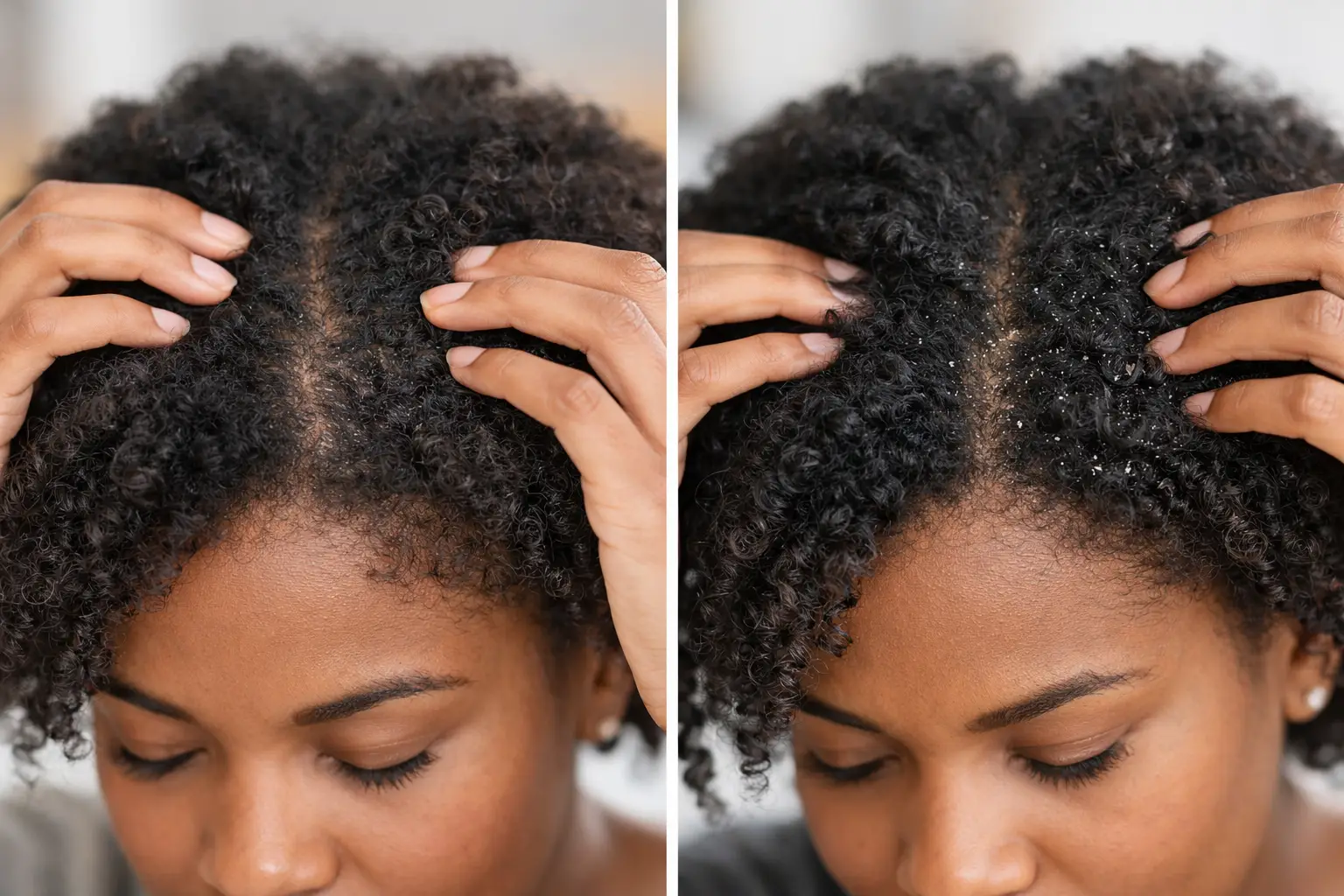
Seeing flakes on your shirt after a long day can send you straight to the wrong solution. The dry scalp vs dandruff question matters because both can cause itching and visible flaking, but they do not start the same way and they do not respond to the same care. If your scalp feels tight, irritated, or oily in certain spots, the details tell you more than the flakes do.
Dry scalp vs dandruff: why the difference matters
A dry scalp usually means the skin on your scalp is lacking moisture. That can happen when the skin barrier is compromised, the air is dry, your shampoo is too harsh, or you wash with water that strips away natural oils. The flakes tend to be smaller, lighter, and drier. Your scalp may feel tight, especially after washing.
Dandruff is different. It is often linked to excess oil, scalp imbalance, and yeast activity on the skin. The flakes can be larger, slightly yellow or white, and they often cling to the scalp or hair rather than falling away like dry skin. Itching can be stronger, and the scalp may look irritated or greasy at the same time.
This distinction matters because adding richer oils to a scalp that is already struggling with dandruff can sometimes make buildup worse. On the other hand, relying only on strong anti-dandruff products when your real issue is dryness can leave the scalp even more uncomfortable.
What dry scalp looks and feels like
Dry scalp tends to show up with fine, powdery flakes. They often fall easily onto dark clothing and may become more noticeable in colder weather or after frequent washing. The scalp can feel sensitive, stretched, or rough. Some people also notice dryness around the hairline, ears, or forehead.
The cause is usually straightforward. The scalp is skin, and when skin loses moisture, it becomes more reactive. Hot showers, over-cleansing, alcohol-heavy styling products, and fragranced formulas can all contribute. Even a product that works well for someone else can leave your scalp feeling depleted if your skin barrier is already vulnerable.
If you also have dry skin on other parts of your body, that is another clue. A dry scalp often does not act alone.
What dandruff looks and feels like
Dandruff usually presents with more persistent flaking and a scalp that seems both itchy and oily. The flakes are often larger than dry scalp flakes, and they may collect near the roots. Some people notice patches rather than an even dusting. Redness can appear too, especially when scratching is frequent.
This is why dandruff can feel confusing. Many people assume flakes always mean dryness, but dandruff often happens on scalps that produce plenty of oil. That oil can feed the imbalance that contributes to flaking, irritation, and ongoing discomfort.
Dandruff can also be more stubborn. If you have been moisturizing your scalp consistently and the flakes keep returning, or the scalp feels greasy within a day or two of washing, dandruff becomes more likely.
Dry scalp vs dandruff signs to compare
When you are trying to tell the difference, look at the whole scalp experience, not just one symptom. Dry scalp is more likely when flakes are small and dry, the skin feels tight, and symptoms get worse in dry weather or after washing. Dandruff is more likely when flakes are larger, the scalp feels oily or irritated, and the issue keeps coming back despite using moisturizing products.
It also helps to notice timing. Dry scalp can flare quickly after using a harsh shampoo or after spending time in cold, low-humidity conditions. Dandruff tends to linger and cycle, especially during stress, sweating, product buildup, or inconsistent scalp cleansing.
There is some overlap, and that is where people get frustrated. A scalp can be irritated, flaky, and out of balance at the same time. If you have dandruff and use aggressive products, you may also create dryness on top of it. The goal is not just to remove flakes. It is to restore scalp comfort without pushing the skin further out of balance.
Common triggers that make both worse
Some triggers do not care whether your flakes come from dryness or dandruff. Product buildup is one of them. Heavy styling creams, dry shampoo, and infrequent cleansing can leave residue on the scalp that traps oil, sweat, and irritation.
Weather plays a role too. Dry winter air can worsen a dry scalp, while heat and sweat can aggravate dandruff. Stress is another factor. It may not cause flakes by itself, but it can make inflammation and sensitivity more noticeable.
Then there is overcorrection. Washing too often with harsh cleansers can strip the scalp. Washing too little when dandruff is present can allow oil and buildup to sit longer than they should. Healthy scalp care usually lives in the middle – clean enough to stay balanced, gentle enough to stay comfortable.
How to care for a dry scalp
If your scalp is dry, focus on hydration and barrier support. Use a gentle shampoo that cleans without leaving the scalp squeaky or tight. Look for nourishing botanical oils, soothing herbal ingredients, and formulas that help the skin hold moisture rather than just remove residue.
Keep water temperature warm, not hot. Hot water can feel good in the moment but often leaves dry skin worse afterward. Try to reduce anything that adds unnecessary stress to the scalp, including excessive scratching, strong fragrance, and frequent use of drying styling products.
A well-formulated scalp treatment can help, especially one designed to calm discomfort while supporting moisture balance. This is where ingredient quality matters. Lightweight natural oils and herbal support can nourish the scalp without making hair feel heavy.
How to care for dandruff
When dandruff is the issue, the goal is scalp balance. You want to remove excess oil, reduce visible flaking, and calm irritation without creating more dryness. A targeted anti-dandruff treatment is often the better choice than simply adding more moisture.
Consistency matters here. Dandruff usually does not improve from one wash or one treatment. A scalp-focused routine used regularly tends to work better than switching products every few days. If your scalp is flaky and oily, cleansing on a steady schedule can be more helpful than waiting until discomfort becomes severe.
Natural care can still be effective, especially when it is designed with function in mind. Herbal ingredients that help soothe the scalp and keep it clean can support visible improvement while fitting an ingredient-conscious routine. For people who want a gentler path, that balance is often the main concern.
When your scalp needs both soothing and treatment
Sometimes the answer is not dry scalp or dandruff. It is both, or it changes with the season, your routine, or the products you use. A person may deal with dandruff at the crown and dryness around the hairline. Someone else may start with dandruff, then create dryness by overusing harsh treatments.
That is why paying attention to your scalp response matters more than following a trend. If a product removes flakes but leaves your scalp raw, it is not the right long-term fit. If a moisturizing product feels good but the flaking keeps returning, it may not be addressing the real cause.
A balanced routine often includes a cleansing step that respects the scalp barrier and a treatment step that targets your main concern. Mimea Herb approaches this with a practical, plant-based mindset – support hydration where the scalp is dry, and use focused anti-dandruff care where imbalance is driving persistent flakes.
When to get professional advice
If the flaking is severe, painful, or spreading beyond the scalp, it is time to get expert guidance. The same applies if you notice thick patches, significant redness, or hair shedding that feels out of the ordinary. Not every flaky scalp issue is simple dryness or dandruff.
Conditions such as seborrheic dermatitis, psoriasis, eczema, or contact reactions can look similar at first. If home care is not helping after a few weeks, a dermatologist can help identify what is really going on.
The good news is that many scalp concerns do improve once the cause is clear. The right care is usually less about doing more and more about doing what fits your scalp.
Your scalp gives you useful signals when you slow down enough to notice them. Small, dry flakes and tightness ask for hydration. Persistent flakes, oiliness, and irritation ask for a more targeted response. When you treat the cause instead of just brushing away the evidence, comfort and confidence usually follow.
Leave a Reply